10. Patchwork Denim Tote from Old Jeans
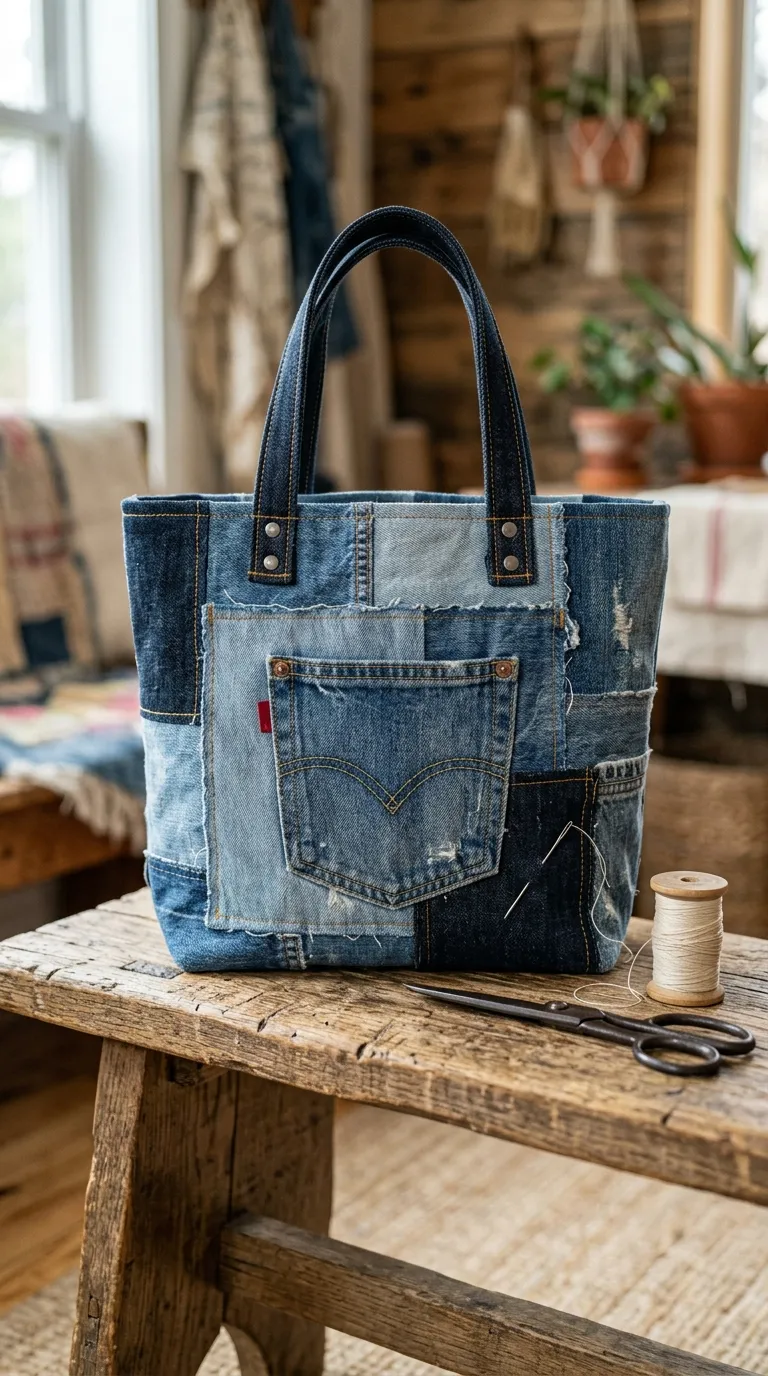
Finally, for a tote that combines sustainability with style, consider a patchwork denim tote made from old jeans. It’s a wonderful way to breathe new life into denim that’s no longer worn but is still strong and full of character. The varied washes and textures make every patchwork bag completely unique.
Cut panels from the legs, back panels, and even the waistbands of old jeans. Combine them into a patchwork design, then construct the bag like a simple tote. Because denim is thicker, you’ll want to use a heavy-duty needle and stitch slowly. Topstitching in a contrasting thread gives the bag a true jeans-inspired look, and the original belt loops can even be used as decorative elements on the front.
Expect to spend about four hours on this project, mostly because of the thick seams you’ll be sewing through. The difficulty is intermediate, but the result is a sturdy, long-lasting bag that only gets more charming with use. To make it extra special, leave a back pocket intact and use it as a built-in exterior pocket for your phone or a small notebook.
What fabric is best for a beginner tote bag project?
Cotton canvas, quilting cotton, or a medium-weight home decor fabric are all excellent choices for beginners. They press well, feed through a sewing machine smoothly, and hold their shape without being too bulky. Quilting cotton is especially forgiving for first projects, while canvas makes a more structured tote that stands up on its own.
How much fabric do I need for a basic tote?
For a medium tote, plan on about half a yard of fabric for the outer body and another half yard for the lining. If you’re adding handles from fabric rather than using webbing, you may need a little more. Patchwork and scrap-buster projects can use much less, since small pieces are combined to create the panels.
Can I sew a tote bag without a sewing machine?
Absolutely. Tote bags can be hand-sewn using a simple running stitch or a backstitch for stronger seams. The project will take longer, but the result is just as functional and often has a beautiful handmade charm. For thick layers like denim, a thimble and heavy-duty needle make hand-sewing more comfortable.
What kind of interfacing should I use for structure?
For most totes, a medium-weight fusible interfacing is a great choice. It adds body without making the fabric too stiff. If you want a very structured tote that stands up on its own, a heavy interfacing or even a layer of foam stabilizer can be used on the outer panels.
How do I keep my tote bag from fraying at the seams?
Finishing your raw edges with a zigzag stitch, a serger, or pinking shears will help prevent fraying. French seams are another lovely option for lighter fabrics, and they enclose the raw edges completely for a clean interior finish.
Are tote bags good handmade gifts?
They truly are. A handmade tote is practical, personal, and easy to customize to the recipient’s taste. Choosing a fabric in their favorite color, adding a hand-painted design, or embroidering their initials turns a simple tote into a thoughtful keepsake they’ll use for years.
How should I wash my handmade tote bag?
Most cotton totes can be machine washed on a gentle cycle with cold water and then air-dried flat. For bags with painted or heavily structured elements, hand washing is a safer choice. Always test a small area first if you’re unsure how a fabric will react.
There you have it: ten tote bag sewing ideas that are perfect for a weekend of creative making. Whether you’re drawn to a simple beginner-friendly market tote, a colorful patchwork project, or something a little more involved like a quilted laptop bag, there’s a design on this list waiting to become your next favorite make. Pick the one that excites you most, gather your fabric, and set aside a few quiet hours. Once you finish, you’ll have a bag that’s completely your own, ready to be filled with groceries, books, beach towels, or yarn for your next project. Happy sewing.