Long hair and the gym have always had a complicated relationship. You show up for a workout with your hair looking great, and thirty minutes into your session it has migrated across your face during cardio, fallen out of its ponytail during squats, absorbed enough sweat to double in weight during a spin class, and generally staged a full rebellion against every styling decision you made before you walked through the door.
Sound familiar? You are not alone. Managing long hair at the gym is one of the most universally shared frustrations among people with longer hair lengths — and it is a problem that deserves a real solution rather than the same tired advice to just throw it in a ponytail.
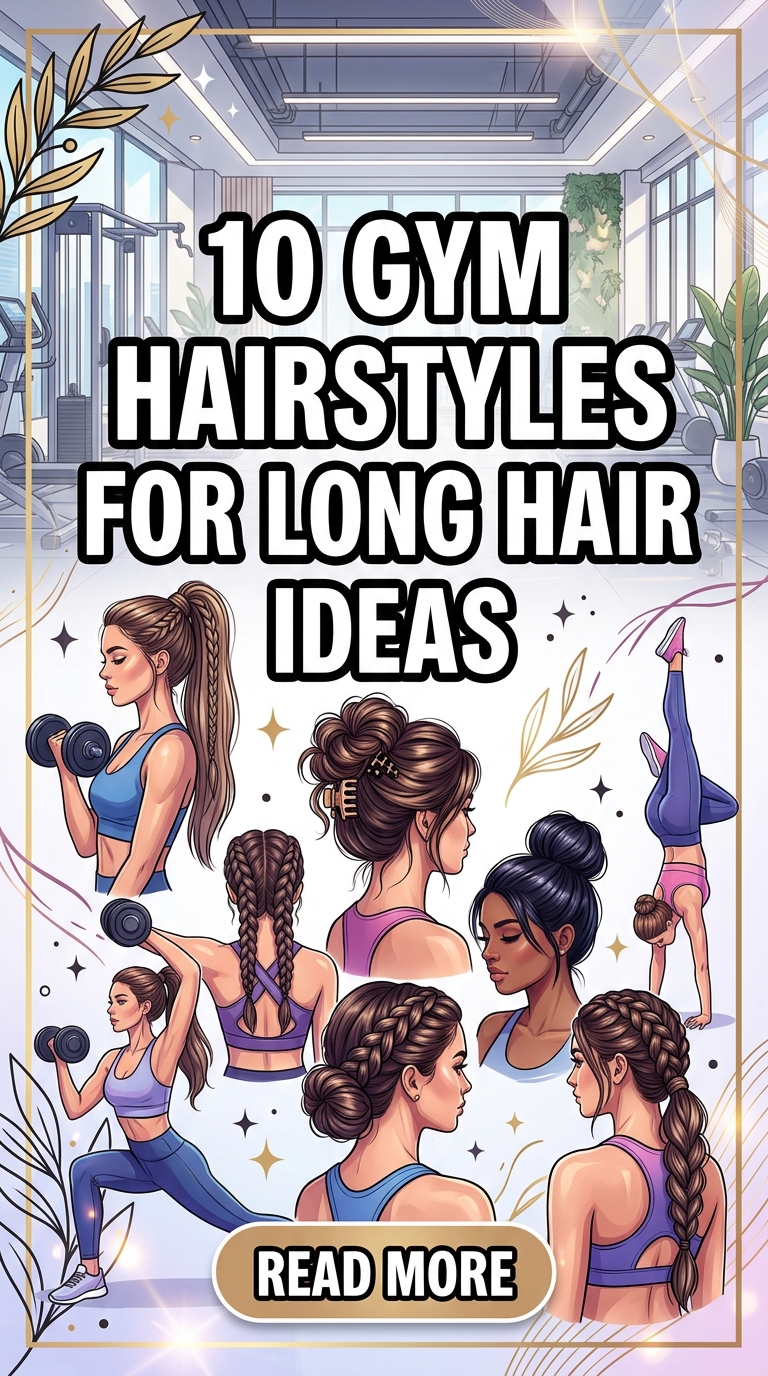
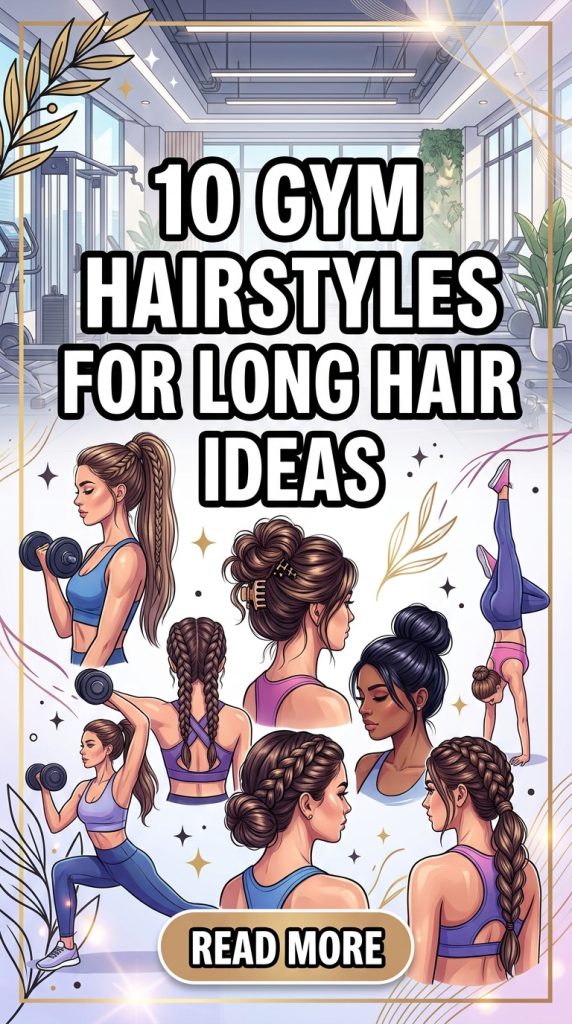
This guide covers 10 gym hairstyles for long hair ideas that are specifically designed to handle the real demands of physical exercise. These are styles that stay put through high-intensity interval training, survive the heat of a spin class, look good enough for the mirror selfie you are absolutely going to take, and protect the long-term health of your long hair in the process. Every style includes step-by-step instructions, technique details, product recommendations, and guidance on which workouts each style handles best.
At the end you will find 10 detailed Pinterest image prompts for content creators and photographers. Let’s get into it.
Why Your Current Gym Hairstyle Might Be Failing You
Before exploring the solutions, it is worth understanding why so many common gym hairstyles for long hair fail in the first place. There are specific reasons why the style that works beautifully in everyday life completely falls apart the moment you start exercising.
The four main reasons gym hairstyles fail on long hair:
Weight and gravity — Long hair is heavy, and when you are moving, jumping, inverting, or changing positions rapidly, that weight works against your hair tie in ways that static daily wear does not. A ponytail that holds perfectly while you are sitting at a desk will slide and loosen the moment you start doing burpees.
Sweat — Sweat changes the texture of hair at the scalp, making it slippery, heavy, and less able to grip the hair tie that is holding a style in place. It also makes the hair at the roots stick to the scalp in a way that can pull styles downward and out of their original position.
Movement range — Many workouts involve movements that standard daily hairstyles are simply not designed for — inversions in yoga, pulling the chin to the chest for sit-ups, rapid head movements in dance or martial arts, or the consistent back-and-forth motion of running. A hairstyle needs to be engineered for the specific movement demands of your workout.
Length and strand interaction — Long hair is more likely to catch on equipment, get grabbed during grappling-based workouts, fall into your face during any forward-leaning exercise, and generally create physical interference with your exercise technique.
The solution to all of these problems is choosing the right style, using the right products, and understanding which style works best for which type of workout.
1. The High Braided Ponytail
The Vibe: Sporty, polished, secure, and the gym hairstyle that means business.
The high braided ponytail takes the classic gym ponytail and upgrades it significantly by adding a braid to the ponytail length itself. Where a standard high ponytail tends to whip back and forth, tangle, and eventually slide down as a workout progresses, a braided ponytail keeps the length contained, reduces movement interference, and provides significantly more security at the base.
What Makes It Work at the Gym:
Braiding the ponytail reduces the surface area of loose hair that can catch on equipment, slap against the face during running, or tangle during fast movements. The braid also adds internal structure to the ponytail that helps it maintain its position at the base of the skull rather than slowly sliding downward as sweat accumulates. On long hair specifically, the braid dramatically reduces the weight-induced pull on the hair tie that causes standard ponytails to loosen mid-workout.
How to Create It:
Apply a small amount of edge control or a strong-hold gel to the hairline before pulling hair back — this is the single most effective step for keeping a gym hairstyle in place through sweat. Gather all long hair into a high ponytail positioned at the very crown of the head. Secure with a strong spiral hair tie or a thick elastic band — not a thin elastic, which will cut into the hair and eventually snap under the tension of a workout. Divide the ponytail into three sections and braid all the way to the ends. Secure with a small elastic. The braid should be moderately tight — loose enough that it is not pulling on the scalp, tight enough that it does not begin to unravel immediately.
Pro Tips:
- Position the ponytail as high on the head as comfortable — a crown-level ponytail is less likely to slide down during exercise than one positioned at the back of the head
- Double up on the hair tie at the base for long, heavy hair — use two strong elastics rather than one, placed close together at the base of the ponytail
- A braid that is wrapped in a spiral hair tie at the end rather than a thin elastic holds better and causes less breakage at the most stress-prone point
- Apply dry shampoo at the roots before the workout — it absorbs the first wave of sweat and significantly extends the time before the style begins to loosen
Best For: All long hair textures. Works for virtually every workout type.
Best Workout Match: Running, HIIT, cycling, cardio classes, weightlifting, CrossFit.
How Long It Holds: Full workout plus recovery time — one of the most durable gym hairstyles on this list.
2. The Double Dutch Braid
The Vibe: Athletic, symmetrical, secure, and the gym hairstyle that professional athletes actually wear.
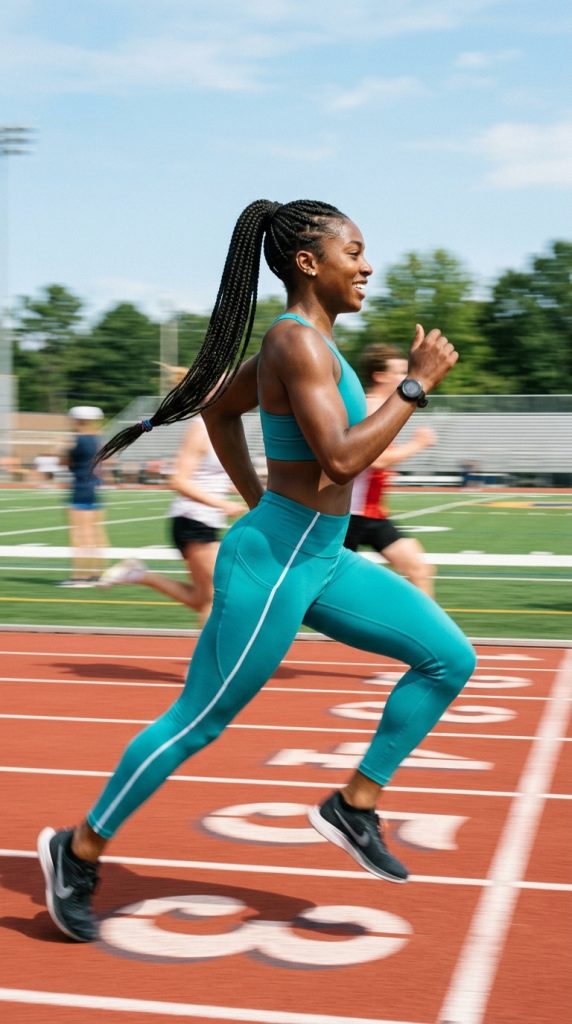
Double Dutch braids — also called boxer braids in gym culture — are one of the most functional and widely praised gym hairstyles for long hair for very good reason. They keep every strand of long hair braided flat against the scalp, distributed symmetrically on both sides of the head, with no loose length to whip, bounce, or tangle. They are the gym hairstyle that simply does not move.
What Makes It Work at the Gym:
The Dutch braid technique — which involves crossing strands under rather than over, creating a braid that sits raised above the hair — pins the hair flat against the scalp along its entire length. On long hair, this means the full length from root to tip is braided and secured against the head rather than hanging loose and creating movement interference. The symmetrical two-braid structure distributes the weight of long hair evenly, eliminating the one-sided pull that a single ponytail or braid creates during dynamic movement.
How to Create It:
Part the hair cleanly down the center from forehead to nape. Clip one side out of the way while working on the other. Starting at the front hairline on the free side, take a section of hair and divide into three strands. Begin a Dutch braid by crossing the right strand under the center, then the left strand under the center. On each subsequent cross, pick up a new section of hair from the scalp on that side and add it to the strand before crossing under. Continue this Dutch braid — crossing under and picking up new sections — all the way down to the nape. Once all hair is incorporated, continue with a standard three-strand braid to the ends and secure. Repeat on the other side.
Pro Tips:
- The cleaner and more precise the center part, the more polished and symmetrical the finished double Dutch braids — use a fine-tooth comb and a small amount of water on the part line
- Braid slightly damp hair — the moisture gives the hair grip and helps the braid hold its shape through the sweat of a workout
- For extra security on long hair, add a second elastic near the end of each braid before the final elastic — this prevents the braid from slowly unraveling from the bottom up during high-intensity movement
- The ended braids can be tucked under and pinned for an even more compact gym style, or left to hang freely if preferred
Best For: All long hair textures. Particularly excellent for long curly and wavy hair that would otherwise experience significant volume increase and frizz during workouts.
Best Workout Match: Every workout type — this is the most universally functional gym hairstyle on this list. Particularly excellent for yoga, gymnastics, martial arts, and any exercise involving inversions.
How Long It Holds: Full workout — all day if needed.
3. The Secure Messy Bun
The Vibe: Casual, effortless, and deceptively well-engineered for exercise.
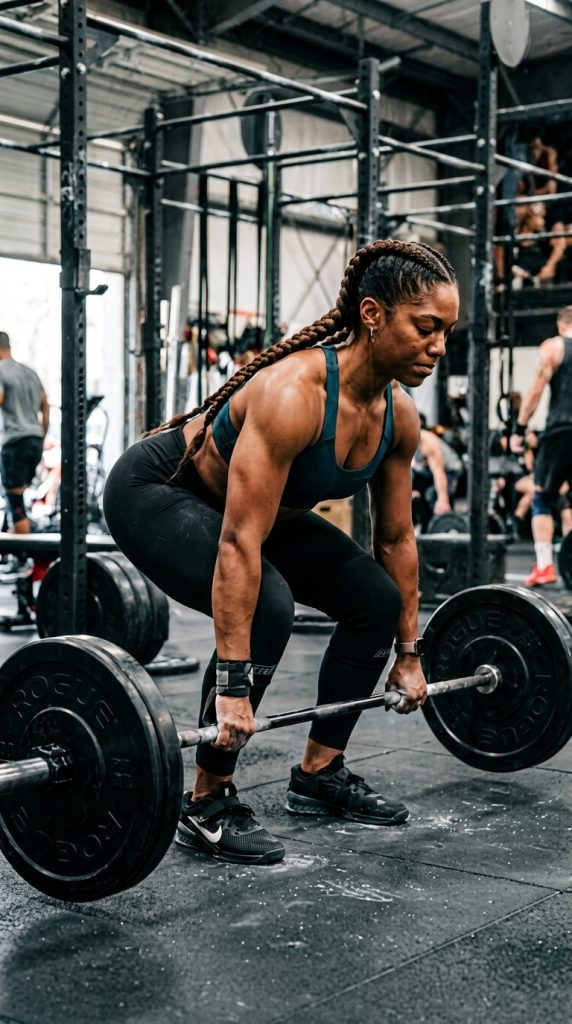
The messy bun at the gym gets a bad reputation because it is frequently executed incorrectly — resulting in a bun that starts falling apart ten minutes into the workout. But a properly constructed gym messy bun, using the right techniques and the right products, is actually an extremely effective gym hairstyle for long hair. The key is in the engineering beneath the messy exterior.
What Makes It Work at the Gym:
A correctly built gym messy bun distributes the weight of long hair into a compact shape at the top of the head, away from the neck, and uses multiple securing elements rather than a single hair tie. The strategic messiness is not accidental carelessness — it is an intentional looseness that allows the bun to absorb movement and flex slightly without losing its overall structure.
How to Create It:
Apply a strong-hold mousse or gel to the roots before pulling hair up. Gather all long hair into a high ponytail. Twist the ponytail once or twice and wrap it loosely around the base to form a bun shape — do not try to make it neat or tight. Secure the bun with a strong elastic by wrapping it around multiple times. Take four or five bobby pins and place them through the bun and into the base ponytail in an X pattern — these pins are the structural element that stops the bun from falling down. Add a second hair tie over the entire bun for maximum security. Pull a few pieces loose deliberately for the messy effect.
Pro Tips:
- The bobby pins placed in an X pattern through the bun are non-negotiable — without them, the weight of long hair will pull the bun downward within minutes of intense activity
- Apply a non-slip hair tie band at the hairline after putting the bun up — these grip bands go around the forehead and prevent the style from sliding backward during exercise
- For very long or very thick hair, divide the ponytail into two sections before bun-building and construct two overlapping buns rather than one oversized bun that will not stay
- A light mist of a strong-hold hairspray over the entire finished bun before working out significantly extends how long it holds
Best For: Long hair of all textures. Thick long hair benefits most from the double-bun technique.
Best Workout Match: Weightlifting, yoga, Pilates, barre, low-to-medium intensity cardio.
How Long It Holds: 45–60 minutes with proper construction. Rebuild quickly between workout segments if needed.
4. The Knotted Bun Updo
The Vibe: Minimal, architectural, and significantly more secure than it looks.
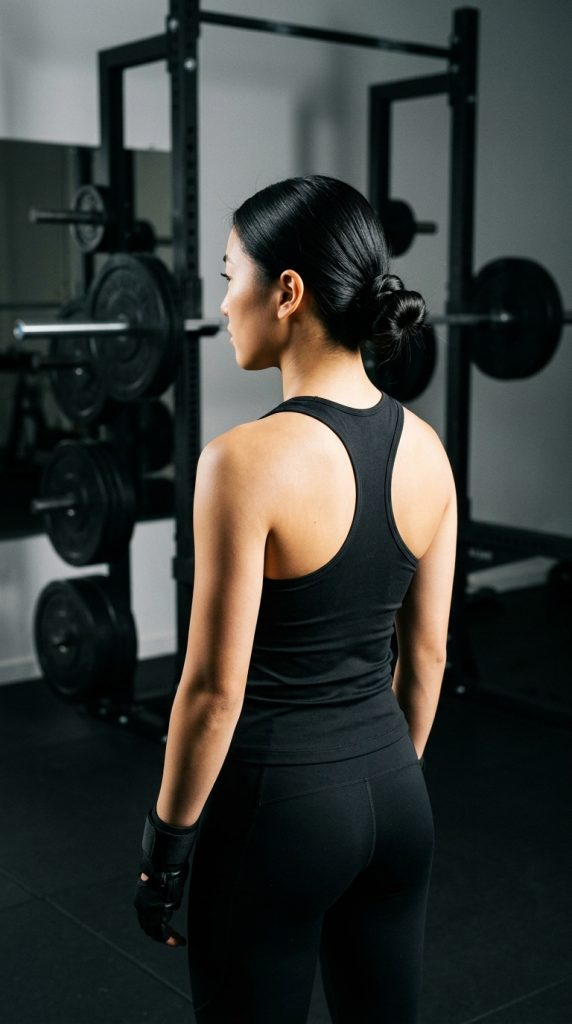
The knotted bun is a lesser-known gym hairstyle technique that is significantly more secure than a standard messy bun because the knot itself creates internal tension that holds the bun structure together. It requires no bobby pins — the knot does all the work — and takes about ninety seconds to execute, making it ideal for people who do not want to spend time on gym hairstyling.
What Makes It Work at the Gym:
The overhand knot that forms the base of this bun creates a self-locking structure that becomes more secure under tension rather than less. When the hair pulls during movement, the knot tightens slightly rather than loosening, which is the opposite of what happens with a standard twisted bun where movement gradually causes the bun to unwind.
How to Create It:
Gather all long hair into a high ponytail and secure with a strong elastic. Divide the ponytail into two equal sections. Tie these two sections in a simple overhand knot — exactly like the first step when tying shoelaces. Pull the knot tight against the base of the ponytail. Wrap the remaining length around the knot in a coil and tuck the ends under. Secure the whole structure with a second elastic placed over the top of the entire bun. The knot locks everything in place.
Pro Tips:
- Pull the knot as tight as is comfortable at the base of the ponytail before tucking the ends — the tighter the knot, the more secure the entire structure during exercise
- This style works best when the initial ponytail elastic is placed very securely — double up on the elastic at the base if the hair is very thick or very long
- Apply a light-hold gel to the hairline before creating the updo — this step controls the baby hairs and edges that tend to escape and frizz during workouts
- The knotted bun sits lower and flatter against the head than a standard messy bun, which makes it more comfortable for lying down during exercises like bench press or floor work
Best For: Long straight and wavy hair. Works well on thick long hair.
Best Workout Match: Weightlifting, Pilates, yoga, barre, any exercise with floor work or lying-down positions.
How Long It Holds: Full workout — the self-locking structure makes this one of the most durable gym bun techniques.
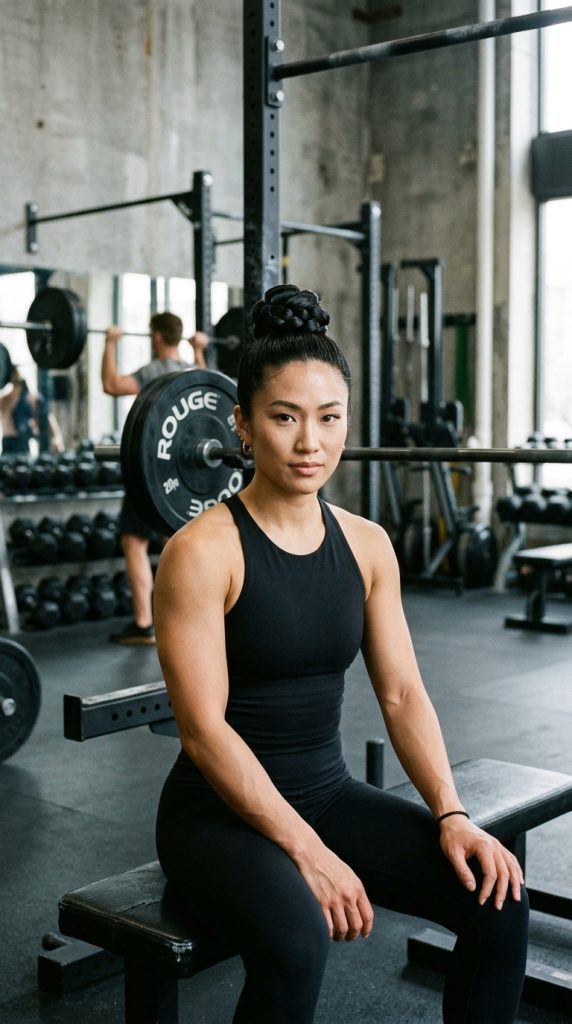
5. The Rope Twist Ponytail
The Vibe: Polished, sporty, and far more interesting than a basic ponytail.
The rope twist ponytail takes a standard high ponytail and twists the length into a rope-like structure that dramatically reduces the surface area of loose hair interfering with movement. It is faster than a braid, more interesting than a plain ponytail, and significantly more secure during exercise because the twisted structure reduces the whipping and tangling that plagues standard ponytails during dynamic workouts.
What Makes It Work at the Gym:
The two-strand twist creates a rope-like tension through the entire length of the ponytail. This tension means the ponytail moves as a single, cohesive unit rather than as a mass of individual strands that can separate, tangle, and swing independently. The reduced surface area also means less drag during fast movement — particularly relevant for running, where a standard ponytail can create significant resistance and distraction with every stride.
How to Create It:
Gather all long hair into a high ponytail at the crown. Secure with a strong elastic. Divide the ponytail into two equal sections. Twist both sections individually in the same direction — say, clockwise — as tightly as is comfortable. Without releasing the individual twists, wrap the two sections around each other in the opposite direction — counterclockwise. The opposing twist tension locks the rope structure together. Secure the end with a small elastic. The finished ponytail should feel firm and rope-like in structure.
Pro Tips:
- The tighter the individual twists and the tighter they are wrapped around each other, the more secure and durable the rope structure through exercise
- Apply a small amount of edge control or firm-hold gel to the ponytail before twisting — it gives the hair grip and helps the twist hold under sweat
- A rope twist ponytail on long hair can be further secured by folding it back toward the base and securing with a second elastic — creating a looped rope twist that is even more compact and movement-proof
- For very long hair, the rope twist significantly reduces the length of the effective ponytail by creating a tighter, coiled structure — this means less material whipping around during exercise
Best For: Long straight and wavy hair. Works beautifully on long natural hair textures as well.
Best Workout Match: Running, cycling, dance classes, aerobics, any high-movement cardio workout.
How Long It Holds: Full workout — the internal tension of the twist structure is self-maintaining.
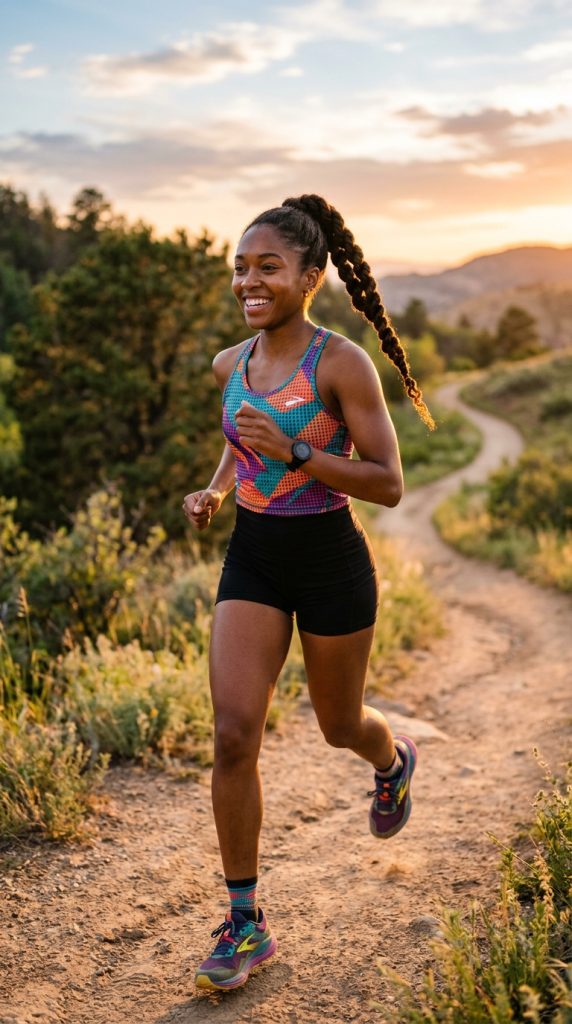
6. The French Braid into Low Bun
The Vibe: Elegant, athletic, and the gym hairstyle that looks the most impressive for the amount of effort it requires.
The French braid into low bun combines two of the most effective gym hair techniques into a single, compound style. The French braid at the top keeps the crown and sides of long hair flat against the scalp and completely controlled. The low bun at the nape keeps the full length of long hair contained and off the neck. The combination creates a style that handles every phase of a workout with equal effectiveness.
What Makes It Work at the Gym:
The French braid section completely eliminates the problem of hair at the crown and sides escaping during exercise — every strand in the top section is woven into the braid structure. The low bun keeps the bulk of long hair at the nape rather than the crown, which means it does not bounce and pull during running or high-impact exercise, and it does not interfere with headrest contact during lying-down exercises.
How to Create It:
Starting at the center crown, take a section of hair and begin a French braid — crossing strands over the center and picking up new hair from the sides with each pass. Continue the French braid all the way down from the crown to the nape, incorporating all of the hair as you go. Once all hair is incorporated into the French braid at the nape, continue with a standard three-strand braid for two to three inches. Then coil the braid into a small bun at the nape and pin it flat against the head with four to six bobby pins. The finished style should be flat against the head with no loose sections.
Pro Tips:
- The French braid must be kept moderately tight to last through a workout — significantly tighter than you would make it for a fashion look but not so tight that it causes scalp tension
- The low bun placement at the nape is critical for comfort during floor exercises — a bun at the crown creates a pressure point when lying on your back, while a nape bun lies flat and comfortable
- Pin the bun using the X-pattern technique — placing two pairs of pins in an X through the bun and into the braid structure beneath — for maximum security
- This style is particularly effective for hot yoga, spin, and other high-sweat workouts because the French braid section keeps sweat from loosening the crown of the style
Best For: Long hair of all textures. Particularly excellent for long hair that is prone to escaping standard ponytails.
Best Workout Match: Hot yoga, spin class, high-intensity cardio, CrossFit, dance fitness.
How Long It Holds: Full workout — one of the most structurally sound gym hairstyles for long hair.
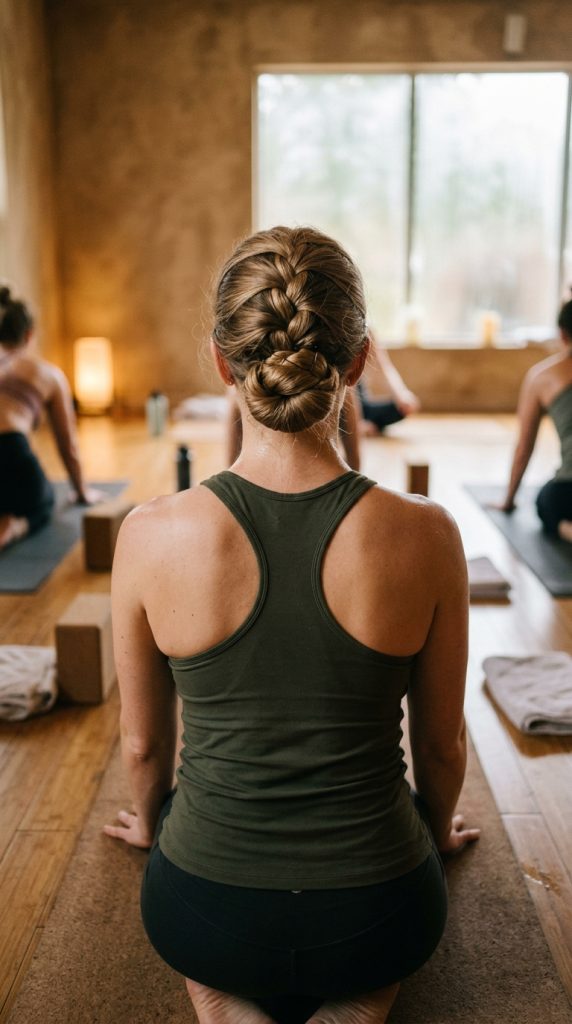
7. The Braided Crown Updo
The Vibe: Unexpected, beautiful, and completely practical once you understand its construction.
The braided crown is most commonly thought of as a formal or romantic hairstyle — but as a gym hairstyle for long hair, it is remarkably effective. By braiding the hair into a halo that encircles the entire head and pins flat against the scalp, the braided crown achieves what no ponytail or bun can match — it puts all of the long hair simultaneously up and flat, with zero loose length to bounce, whip, or interfere with movement.
What Makes It Work at the Gym:
The braided crown distributes the weight of long hair evenly around the entire circumference of the head rather than concentrating it in a single ponytail point. This even weight distribution is dramatically more comfortable during high-impact exercise and significantly reduces the pulling sensation on the scalp that heavy long-hair ponytails create during running. With all the hair pinned flat in a braid around the head, there is literally nothing loose to interfere with exercise.
How to Create It:
Create two Dutch or French braids — one on each side of the head — starting at the front hairline on each side and braiding downward toward the nape. Once both braids are complete, take the right braid and lay it across the top of the head, pinning it along the left side of the head with four to five bobby pins. Take the left braid and lay it across the top in the opposite direction, tucking the end under the first braid on the right side and pinning. All ends should be tucked and pinned so no loose hair remains.
Pro Tips:
- Use at least ten bobby pins total — distributed evenly around the crown — for a braided crown that holds through high-intensity exercise
- Apply a firm-hold gel or edge control to the hairline before beginning the braids — this step significantly reduces the baby hair and flyaway situation that is the main weakness of this style during sweaty workouts
- For an even more secure gym version, braid the two sections as Dutch braids rather than French braids — the raised Dutch braid structure lies flatter against the scalp and stays more securely pinned
- A light mist of strong-hold hairspray over the entire finished crown before working out is the final security measure that keeps this style intact through the most demanding sessions
Best For: Long hair with sufficient length to complete the full circuit around the head — typically shoulder length or longer. Works on all textures.
Best Workout Match: Yoga, gymnastics, Pilates, any exercise involving inversions or positions where a ponytail or bun would be in the way.
How Long It Holds: Full workout with proper pinning — all day if maintained correctly.
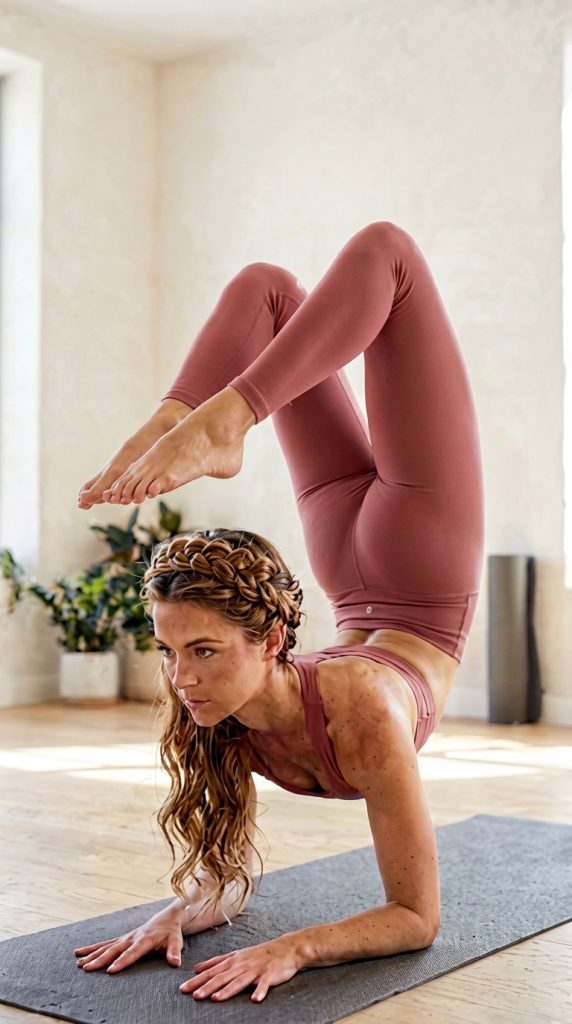
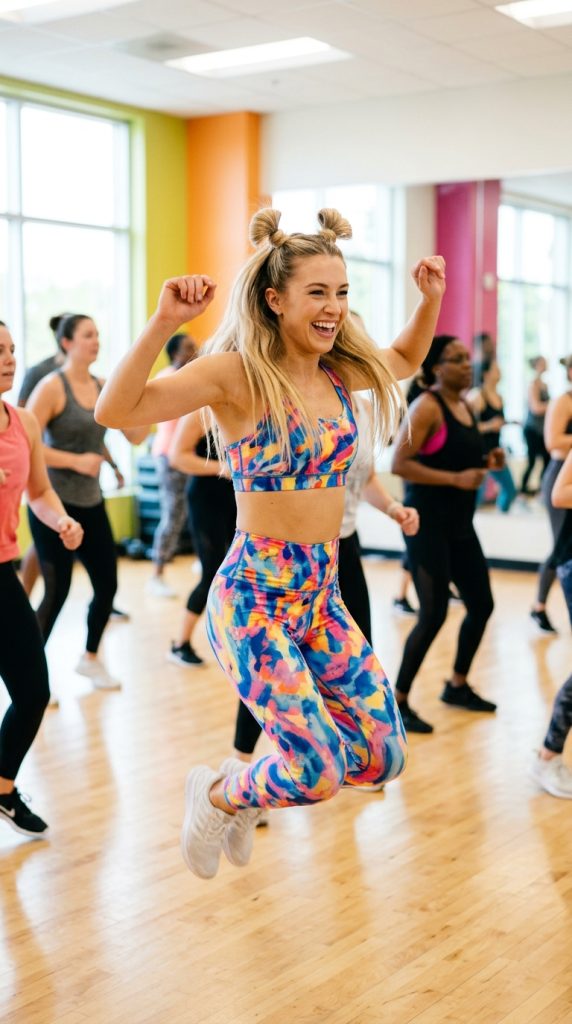
8. The Space Buns for Long Hair
The Vibe: Playful, secure, fun, and the gym hairstyle that takes a casual aesthetic seriously from a functional standpoint.
Space buns — two high buns positioned symmetrically at the top of the head — are not only one of the most visually fun gym hairstyles for long hair, they are also one of the most functionally effective. By dividing long hair into two sections and creating a bun from each, you reduce the weight burden on any single securing point, eliminate the one-sided pull of a single ponytail, and create a style that is symmetrically balanced and dramatically less likely to shift during exercise.
What Makes It Work at the Gym:
Distributing long hair across two buns rather than one is a fundamentally sounder engineering decision for heavy long hair. Each bun handles half the total hair weight, which means each securing elastic and set of bobby pins is working with a more manageable load. The high placement of both buns keeps all long hair above the neckline and away from the shoulders during exercise.
How to Create It:
Part the hair straight down the center from forehead to nape. Clip one half out of the way. On the free half, gather the hair into a high ponytail positioned at the top of the head, slightly back from the hairline. Twist the ponytail and wrap it around its base. Secure with an elastic and four to five bobby pins. Repeat on the other side, positioning the second bun symmetrically with the first. Pull both buns tight and ensure they are symmetrical before applying a final mist of hairspray.
Pro Tips:
- Position the space buns at the very top of the head rather than at the sides — the higher placement distributes the weight better and keeps the style more secure during vigorous movement
- For extra security, apply a non-slip headband at the hairline after creating the buns — it keeps the whole style from migrating backward during exercise
- Space buns on long hair can be made more compact and secure by twisting the ponytail tightly before wrapping and using additional bobby pins in an X pattern through each bun
- Mix and match hair accessories — matching scrunchies over each bun, or color-coordinated elastics — for a fun, personalized gym aesthetic
Best For: Long hair of all textures and most lengths. Particularly effective for very long or very thick hair where a single bun would be excessively heavy.
Best Workout Match: Dance fitness, aerobics, cycling, HIIT, any workout where a symmetric, balanced weight distribution matters.
How Long It Holds: Full workout with proper construction and bobby pin placement.
9. The Half-Up Twisted Bun
The Vibe: A practical compromise between full-up and fully down — ideal for lower-intensity workouts.
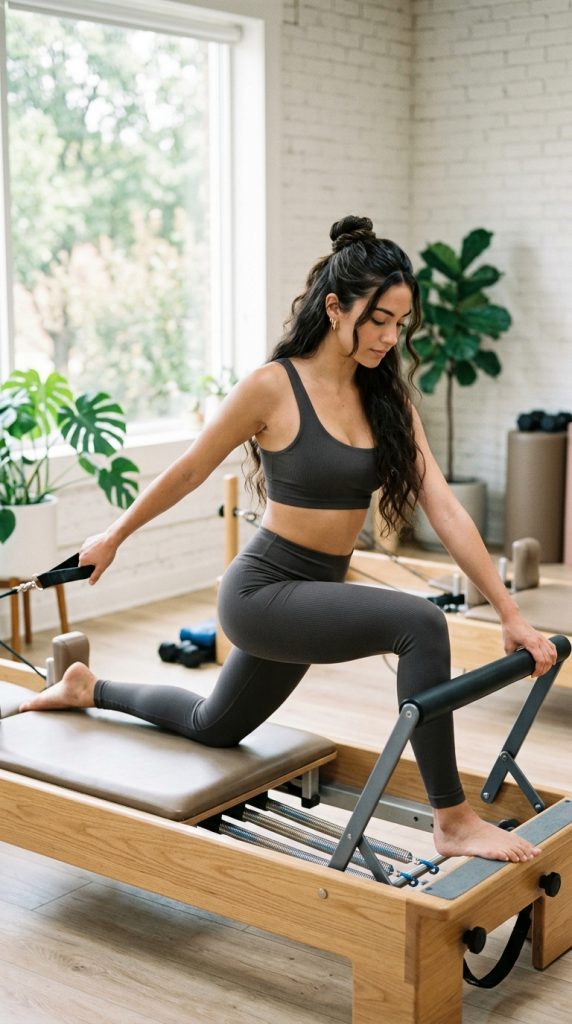
The half-up twisted bun is the gym hairstyle for people who want to keep most of the hair away from the face and neck without committing to a full updo. It takes the top half of long hair — from ear to ear across the crown — and creates a small, tight twisted bun at the crown, leaving the bottom half of the hair to hang loose or be lightly tied back. It is less secure than a full updo but significantly more effective than wearing long hair completely down during exercise.
What Makes It Work at the Gym:
The top section of long hair — the section most prone to falling across the face during forward-leaning exercises and most prone to frizzing at the hairline during sweaty workouts — is fully contained in the bun. The bottom section hangs loose but has significantly less tendency to migrate into the face or neck because the bulk of the hair’s weight is removed from it by the half-up section.
How to Create It:
Section off all the hair from the crown down to a line running from ear to ear. Clip the lower section out of the way. Take the upper section and gather it into a small ponytail at the crown. Twist the ponytail tightly and coil it around its own base to form a small, compact bun. Secure with an elastic and three to four bobby pins. Release the lower section. If the lower section is very long, lightly braid it or tie it with a loose second elastic at the nape.
Pro Tips:
- Apply a strong-hold gel or pomade to the crown section before pulling it up — this tames the fine hairline pieces that are the main source of flyaways during lower-intensity workouts
- For medium-intensity workouts, add a headband at the hairline over the style to keep the front edges controlled without requiring a full updo
- The lower section left down can be loosely braided for additional control during slightly more intense sessions
- This style works particularly well for yoga because the half-up construction keeps hair off the face during forward bends and inversions without the discomfort of a full bun pressing against a headrest
Best For: Long straight and wavy hair. Works on all densities.
Best Workout Match: Yoga, Pilates, barre, light cardio, stretching sessions, low-impact workouts.
How Long It Holds: 30–45 minutes comfortably. Requires rebuilding for longer, more intense sessions.
10. The Sleek Gymnastics Bun
The Vibe: Disciplined, polished, aerodynamic, and engineered for maximum security.
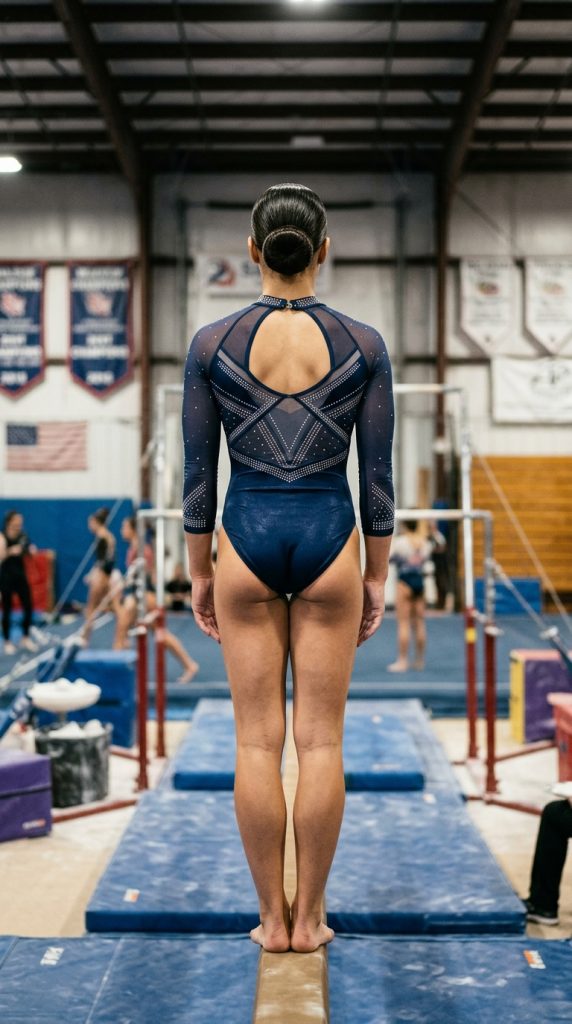
The sleek gymnastics bun is the gym hairstyle that professional athletes, gymnasts, and dancers use because it is flat, smooth, and completely impossible to dislodge during even the most extreme athletic movement. It is the most technically demanding style on this list to construct — but once it is in place, it is the most secure gym hairstyle for long hair in existence. It involves smoothing all long hair completely flat against the head, twisting it into a tight, flat bun, and securing it with multiple layers of products and pins.
What Makes It Work at the Gym:
A gymnastics bun achieves security through compression rather than structure — the bun is pressed flat against the head and secured from multiple angles, making it physically resistant to the forces of movement, gravity, and sweat. Athletes rely on this style because it does not move under any circumstances — it cannot be seen from the front in competition, cannot be grabbed accidentally, and creates no aerodynamic interference during performance.
How to Create It:
Apply a generous amount of strong-hold gel or hair wax to all long hair while damp. Using a fine-tooth comb, smooth all hair completely flat against the head in all directions toward the center back. Gather into a low or mid ponytail and smooth all bumps flat using the comb and additional gel. Twist the ponytail tightly into a flat, compact bun against the head. Secure with a strong elastic. Begin pinning — place bobby pins around the entire perimeter of the bun, inserting each pin through the bun and into the hair and scalp beneath. Place pins in all four compass directions plus the diagonals. Apply a hairnet over the entire bun if desired. Finish with a strong-hold hairspray misted over everything.
Pro Tips:
- Using a smoothing boar bristle brush rather than a plastic brush creates a significantly smoother, flatter surface at the base before pulling into the bun
- Gel application on long hair for a gymnastics bun should be generous — do not be shy. The gel is the first line of security and the foundation of the style’s hold
- A hairnet placed over the finished bun and secured with additional pins creates a professional, competition-level hold that survives even the most demanding physical activity
- Allow the gel to begin setting before completing the bun — wet gel is slippery while partially set gel has grip that makes pinning more effective
Best For: Long straight and wavy hair. Works on any density — thicker long hair requires more pins and product.
Best Workout Match: Gymnastics, competitive dance, martial arts, swimming (under a cap), any high-intensity athletic activity where absolute security is required.
How Long It Holds: All day — the most durable gym hairstyle for long hair on this list.
The Essential Products for Gym Hairstyles on Long Hair
The right products are what separate a gym hairstyle that lasts five minutes from one that lasts the full two-hour training session. Here is the complete product toolkit for gym hair on long hair:
Strong-Hold Gel — The foundational product for any gym hairstyle that involves smoothing long hair back from the face. Apply to the hairline, the roots, and throughout any section that will be contained in a bun or braid. Gel creates the grip that prevents sweat from loosening the style’s hold at the scalp. Look for a gel with water-resistance or sweat-resistance properties.
Dry Shampoo — Applied Before the Workout — Most people think of dry shampoo as a post-workout product, but applying it at the roots before exercise is one of the most effective strategies for extending gym hairstyle hold. Dry shampoo absorbs the first round of sweat before it can accumulate and make the scalp slippery. This simple step can double how long a gym hairstyle holds during intense exercise.
Non-Slip Headband — A silicone-lined or ribbed fabric non-slip headband worn at the hairline before a workout is one of the most underrated gym hair accessories for long hair. It creates a physical barrier that keeps the entire hairstyle from sliding backward during exercise. It also keeps the fine pieces at the hairline controlled without requiring additional gel or edge control.
Strong Spiral Hair Ties — Standard thin elastics are not sufficient for long, heavy hair during intense exercise. Spiral or coil hair ties grip the hair differently than standard elastics — they hold with tension distributed along a longer surface area rather than a single point, which significantly reduces the cutting pressure and the likelihood of the elastic snapping or losing hold during a workout.
Bobby Pins — More Than You Think You Need — Most gym hairstyles for long hair require at least six to ten bobby pins to hold through exercise. Using two or three bobby pins for a gym bun is almost always insufficient. Use twice as many as you think you need and use them in pairs placed in X patterns for the most secure hold.
Edge Control — Applied specifically to the hairline before creating any gym hairstyle, edge control creates a strong-hold foundation at the most vulnerable area — the fine baby hairs that escape first and signal to the rest of the style that it is time to fall apart.
Anti-Frizz Serum — Applied to the mid-lengths and ends before creating any gym hairstyle involving loose sections, an anti-frizz serum prevents the hair from expanding into a frizzy, undefined shape during the heat and humidity of exercise.
Strong-Hold Finishing Spray — A final mist over the entire completed gym hairstyle creates a surface seal that holds everything in place through moisture. Look specifically for a spray labeled as long-hold, sport, or humidity-resistant for the best performance during exercise.
Protecting Long Hair Health at the Gym
Frequent exercise creates specific challenges for long hair health that most people do not address until they start noticing damage. Here is how to protect long hair during your regular gym routine:
Avoid Tight Styles in the Same Position Every Day: Wearing a ponytail in exactly the same position — same height, same tightness — every single day creates repeated tension on the same section of hair follicles. Over weeks and months, this consistent tension can cause traction-related hair thinning and breakage at the ponytail line. Rotate between a high ponytail, a low bun, a braided style, and a crown bun through the week to distribute the tension across different areas.
Never Sleep in Gym Hairstyles: Gym hairstyles involve tight elastics and multiple bobby pins — leaving these in place during sleep causes mechanical breakage at the points of contact. Always remove all gym styling tools before bed and sleep with long hair in a loose braid or bun secured with a satin scrunchie.
Detangle Carefully After Sweaty Workouts: The combination of sweat, product buildup, and physical movement during exercise creates knots and tangles in long hair that can cause significant breakage if addressed aggressively. After a workout, apply a generous amount of detangling spray or a slippery leave-in conditioner to long hair before attempting to detangle. Use a wide-tooth comb and work from the ends upward toward the roots, never pulling through a knot from root to tip.
Wash Smartly, Not More: The instinct after every gym session is to wash long hair — but daily washing of long hair causes dryness, color fading, and unnecessary protein removal from the hair shaft. On non-heavy-sweat workout days, dry shampoo applied at the roots and a thorough scalp massage can refresh long hair without a full wash. Reserve full washes for post-high-intensity sessions or after swimming.
Protect from Chlorine if Swimming: If swimming is part of your fitness routine, apply a generous coat of leave-in conditioner to long hair before entering the pool — it creates a barrier that prevents chlorine from directly contacting and stripping the hair shaft. Braid long hair before swimming to prevent tangling in the water. Rinse immediately after exiting the pool and apply another round of leave-in conditioner.
Deep Condition Weekly: Long hair that is regularly subjected to the heat, sweat, and mechanical stress of frequent exercise benefits significantly from a weekly deep conditioning mask. Protein-moisture balanced masks applied for twenty to thirty minutes once a week repair exercise-related damage, restore elasticity, and keep long hair in optimal condition for both health and styling.
Matching Gym Hairstyles to Workout Types
Not every gym hairstyle works equally well for every workout. Here is the definitive guide to matching your gym hairstyle for long hair to your specific exercise:
Running and Cardio: High braided ponytail, rope twist ponytail, double Dutch braids. These styles keep hair contained and reduce the bouncing movement that makes standard ponytails distracting during sustained cardio activity.
Weightlifting: Knotted bun updo, sleek gymnastics bun, high braided ponytail. These styles need to stay out of the way during lifts, be comfortable under a cap, and not interfere with resting the head against a bench or headrest.
Yoga and Pilates: Braided crown updo, French braid into low bun, knotted bun updo. These styles need to remain comfortable in all positions — including inversions, lying flat on the back, and deep forward folds. No style with a high bun that creates a pressure point is appropriate here.
Hot Yoga or Spin Class: Double Dutch braids, French braid into low bun, sleek gymnastics bun. The highest-sweat environments require the styles with the most structural integrity — braided flat against the scalp is the only real option for workouts of this intensity.
Dance Fitness: Space buns, high braided ponytail, double Dutch braids. Dance workouts involve rapid multi-directional movement that needs a style with symmetrical balance and complete scalp security.
Swimming: Sleek gymnastics bun under a swim cap, tight braided bun pinned flat. Under a swim cap, the flattest, most compact styles work best. Any style with height at the crown is uncomfortable under a cap.
Martial Arts or Combat Sports: Double Dutch braids worn low, tight French braid into flat bun. Styles need to be completely flat, have nothing that can be grabbed, and survive contact with mats and other athletes.
Gym Hairstyles for Long Hair Quick Reference Chart
| Style | Setup Time | Security Level | Best Workouts | Lasts |
|---|---|---|---|---|
| High Braided Ponytail | 8 min | Very High | All types | Full workout |
| Double Dutch Braids | 15 min | Maximum | All types | All day |
| Secure Messy Bun | 5 min | High | Low-medium intensity | 45–60 min |
| Knotted Bun Updo | 3 min | Very High | Weights, yoga, Pilates | Full workout |
| Rope Twist Ponytail | 5 min | High | Running, cardio | Full workout |
| French Braid into Low Bun | 12 min | Maximum | Hot yoga, spin, HIIT | Full workout |
| Braided Crown Updo | 15 min | Very High | Yoga, gymnastics | Full workout |
| Space Buns | 10 min | High | Dance, cycling, HIIT | Full workout |
| Half-Up Twisted Bun | 5 min | Medium | Yoga, Pilates, barre | 30–45 min |
| Sleek Gymnastics Bun | 15 min | Maximum | Athletics, swimming | All day |
Frequently Asked Questions About Gym Hairstyles for Long Hair
What is the best gym hairstyle for long hair that actually stays? The double Dutch braids and the sleek gymnastics bun are the two most secure gym hairstyles for long hair. Double Dutch braids keep every strand flat against the scalp through braiding, making them virtually impossible to dislodge. The sleek gymnastics bun achieves security through compression and layered pinning. Both styles are trusted by professional athletes for a reason.
How do I stop my ponytail from falling down during a workout? Use a spiral hair tie rather than a standard elastic, position the ponytail at the very crown rather than the back of the head, apply dry shampoo at the roots before working out to absorb sweat before it loosens the hold, and consider braiding the ponytail length to reduce the weight-induced pull that causes standard ponytails to slide.
Should I wash my long hair after every gym session? Not necessarily. Daily washing of long hair causes dryness and damage over time. On lower-intensity days, dry shampoo applied at the roots can effectively refresh long hair between washes. Reserve full washes for after high-sweat sessions like hot yoga, spin, or intense cardio. A thorough rinse of the scalp with water alone — without shampoo — can also remove sweat without stripping the hair of its natural oils.
What gym hairstyle is best for long hair during hot yoga? The French braid into low bun and the double Dutch braids are the best options for hot yoga with long hair. Both styles keep hair completely flat against the scalp, which means they survive the intense sweating of a heated practice without loosening. Any style with a high bun or loose ponytail will struggle significantly in a hot yoga environment.
Can I wear my long hair down at the gym? For very low-intensity activities like a casual walk, gentle stretching, or light weightlifting with low reps, long hair down is manageable. For any activity involving rapid movement, sustained cardio, sweating, or positions where long hair would fall across the face — such as forward bends or lying exercises — wearing long hair down creates genuine interference with the workout and should be avoided.
How do I prevent hair breakage from gym hairstyles? Rotate the position of your ponytail or bun daily to avoid repeated tension on the same follicles. Use spiral hair ties rather than standard thin elastics. Never tie hair when it is completely dry and brittle — apply a small amount of leave-in conditioner if the hair is particularly dry. Use satin scrunchies for lower-intensity styles. Always detangle gently with a wide-tooth comb after workouts before washing, and deep condition weekly.
Final Thoughts
Long hair at the gym does not have to be a daily battle. With the right hairstyle, the right products, and the right technique, your long hair can be completely managed, completely out of the way, and — crucially — completely protected throughout even the most demanding workout sessions.
The 10 gym hairstyles for long hair ideas in this guide cover every workout type, every intensity level, and every styling preference. From the three-minute knotted bun that anyone can execute in the locker room to the competition-level sleek gymnastics bun that survives literally anything, there is a solution here for every long-haired person who has ever been frustrated by their hair during a workout.
Choose the styles that match your workout types, invest in the products that make them last, commit to a hair health routine that protects your long hair from the cumulative effects of regular exercise, and never let your hair be a reason you do not give your maximum effort in the gym again.
Save this guide, pin your favorites, and share it with every long-haired person in your fitness community who needs this information.