Worm composting—also known as vermicomposting—is one of the most efficient and eco-friendly ways to recycle kitchen waste into nutrient-rich fertilizer. With just a little effort, you can turn food scraps into “black gold” for your garden while reducing household waste.

This guide explores 10 DIY worm compost bin ideas that are practical, budget-friendly, and perfect for beginners as well as experienced gardeners. Each idea includes materials, step-by-step instructions, and pro tips to help you succeed.
1. Plastic Storage Bin Worm Compost System
Why It Works
This is the most popular and beginner-friendly worm bin. Affordable, simple, and easy to maintain.
Materials Needed
- Plastic storage bin with lid
- Drill (for air holes)
- Shredded newspaper or cardboard
- Red wiggler worms
- Kitchen scraps
How to Make It
- Drill small holes in the lid and sides for ventilation.
- Add moist bedding (shredded newspaper).
- Introduce worms into the bin.
- Add small amounts of food scraps.
- Keep the bin in a cool, shaded area.
Pro Tip
Avoid overfeeding—worms can only process a limited amount of waste.
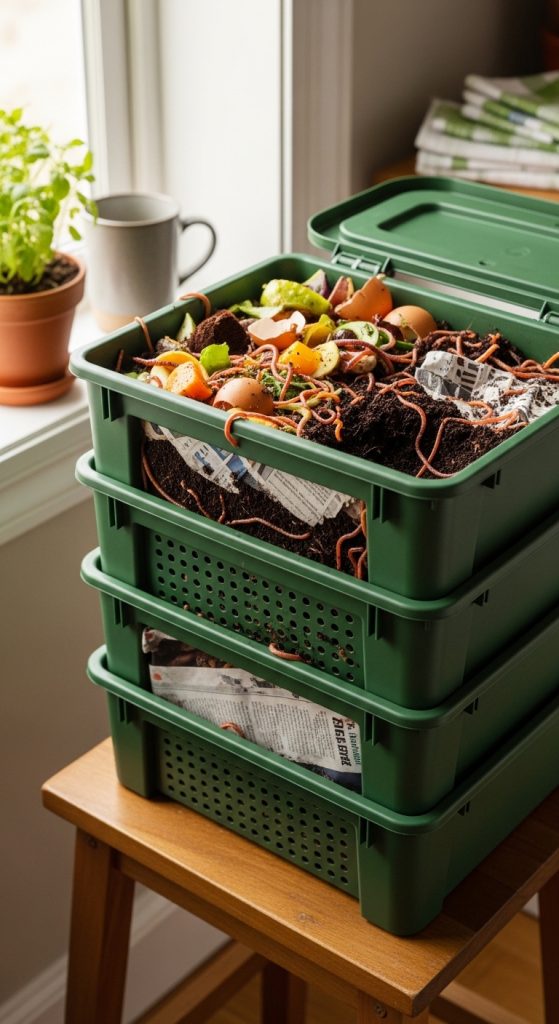
2. Stackable Tray Worm Bin
Why It Works
Allows easy compost harvesting as worms naturally move upward.
Materials Needed
- Multiple plastic trays or containers
- Drill
- Bedding material
- Worms
How to Make It
- Drill holes in each tray for drainage and airflow.
- Stack trays with the bottom one collecting liquid.
- Add bedding and worms to the top tray.
- Add new trays as compost builds.
Pro Tip
Harvest compost from the bottom tray once it’s fully processed.

3. Wooden Worm Compost Box
Why It Works
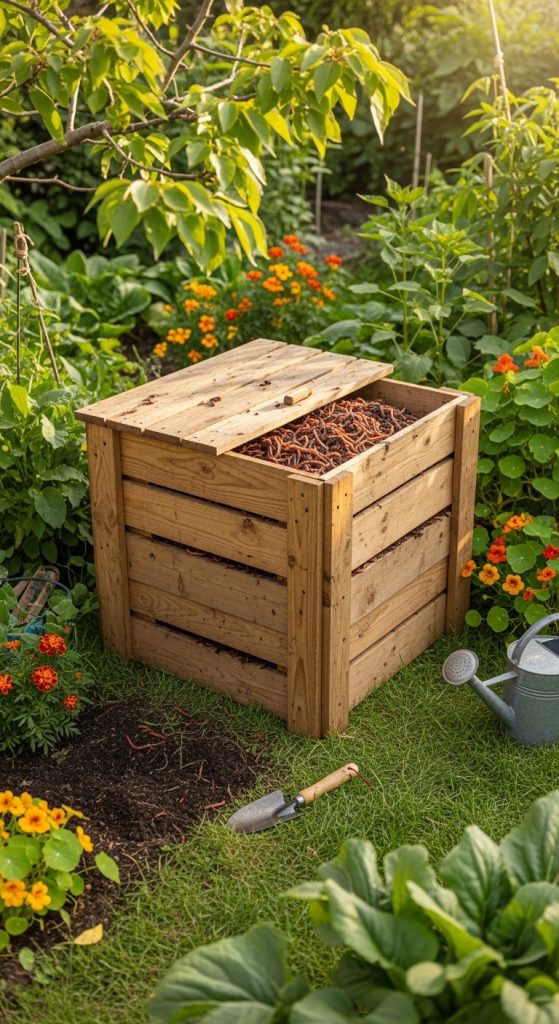
A durable and eco-friendly option that blends well into garden spaces.
Materials Needed
- Wooden planks
- Screws and drill
- Hinged lid
- Mesh lining
How to Make It
- Build a box with a secure lid.
- Add ventilation holes.
- Line the bottom with mesh.
- Fill with bedding and introduce worms.
Pro Tip
Use untreated wood to avoid chemicals harming the worms.
4. Bucket Worm Compost Bin
Why It Works
Compact and perfect for apartments or small homes.
Materials Needed
- Two plastic buckets
- Drill
- Bedding
- Worms
How to Make It
- Drill holes in one bucket (top).
- Place it inside the second bucket to collect liquid.
- Add bedding and worms.
- Feed regularly with food scraps.
Pro Tip
Drain excess liquid (worm tea) weekly for use as fertilizer.

5. Old Drawer Worm Bin
Why It Works
Repurposes old furniture into a stylish compost system.
Materials Needed
- Old drawer
- Drill
- Liner or mesh
- Bedding
How to Make It
- Drill ventilation holes.
- Line the drawer to prevent leaks.
- Add bedding and worms.
- Place in a shaded location.
Pro Tip
Use multiple drawers for a tiered composting system.

6. Vertical Pipe Worm Tower
Why It Works
Great for outdoor gardens—worms compost directly in the soil.
Materials Needed
- PVC pipe
- Drill
- Cap for top
- Kitchen scraps
How to Make It
- Drill holes along the pipe.
- Bury the pipe vertically in soil.
- Add worms and food scraps inside.
- Cover the top.
Pro Tip
Place near plants for direct nutrient absorption.

7. Styrofoam Cooler Worm Bin
Why It Works
Provides insulation, making it ideal for extreme temperatures.
Materials Needed
- Old cooler
- Drill
- Bedding
- Worms
How to Make It
- Drill ventilation holes.
- Add moist bedding.
- Introduce worms and food scraps.
Pro Tip
Keep lid slightly open for better airflow.

8. Hanging Fabric Worm Bin
Why It Works
Space-saving and breathable—perfect for indoor composting.
Materials Needed
- Breathable fabric (like felt)
- Sewing kit or ready-made bag
- Hooks for hanging
How to Make It
- Create a multi-pocket fabric bin.
- Fill top layer with bedding and worms.
- Add food scraps regularly.
Pro Tip
Harvest compost from lower pockets as worms move upward.

9. Mason Jar Mini Worm Bin (Educational Use)
Why It Works
Great for kids and learning about composting on a small scale.
Materials Needed
- Large mason jar
- Soil and sand layers
- Worms
- Food scraps
How to Make It
- Layer soil, sand, and organic matter.
- Add worms.
- Cover loosely for airflow.
Pro Tip
Keep out of direct sunlight to avoid overheating.

10. Outdoor Pit Worm Compost System
Why It Works
A natural, low-maintenance solution for large gardens.
Materials Needed
- Shovel
- Organic waste
- Worms
- Cover (wood or lid)
How to Make It
- Dig a shallow pit in your garden.
- Add food scraps and bedding.
- Introduce worms.
- Cover the pit.
Pro Tip
Rotate pits to maintain continuous compost production.

Final Thoughts
DIY worm compost bins are a powerful way to reduce waste while creating nutrient-rich fertilizer for your plants. Whether you live in a small apartment or have a large backyard, there’s a composting solution that fits your lifestyle.
Start with a simple setup like a plastic bin or bucket, then explore more advanced systems as you gain confidence. With consistency and care, you’ll turn everyday kitchen scraps into valuable compost that benefits both your garden and the environment.