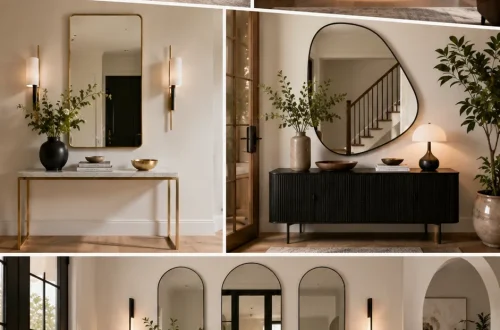
In the modern professional landscape, the home office has evolved from a simple desk in a corner to the most critical workspace in the house. As the boundaries between work and personal life blur, the design of our workspace significantly impacts our cognitive load and creative output. The Japandi aesthetic—a sophisticated synthesis of Japanese minimalist restraint and Scandinavian hygge (coziness)—offers the perfect solution for the contemporary professional.

A Japandi home office is not merely about decor; it is about creating a space that honors the Japanese philosophy of ma (the beauty of empty space) and the Scandinavian principle of functional comfort. By focusing on natural materials, a neutral palette, and disciplined organization, you can build a sanctuary that fosters both deep work and inner peace.
1. The Warm Oak Workspace: The Foundation of Focus
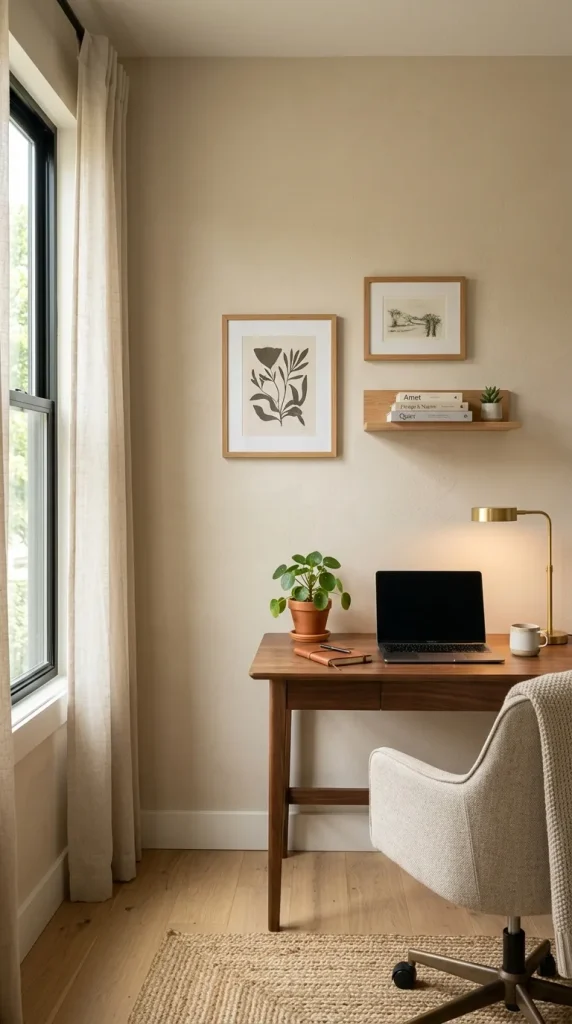
The desk is the heart of your home office, and in a Japandi-inspired space, it must serve as an anchor.
- The Concept: Opt for a desk crafted from light, solid oak, or ash. These species provide the warm, honeyed tones essential to the Scandinavian half of the Japandi equation.
- Why it works: Natural wood grain introduces organic texture and warmth that manufactured materials cannot replicate. It grounds the room and provides a tactile, pleasant surface for daily tasks.
2. Low-Profile Ergonomics: Seeing the Space
Japandi design emphasizes visual flow. A bulky, heavy office chair can dominate a room, disrupting the minimalist aesthetic.
- The Concept: Select a desk chair with a clean, low-profile silhouette. Prioritize ergonomic functionality, but look for designs that avoid excessive padding or oversized mechanical arms.
- Why it works: By keeping the visual footprint of your seating light, you allow the room to feel more spacious and open. This ensures that your office feels like a living space rather than a cubicle.
3. Neutral Textured Walls: The Canvas of Calm
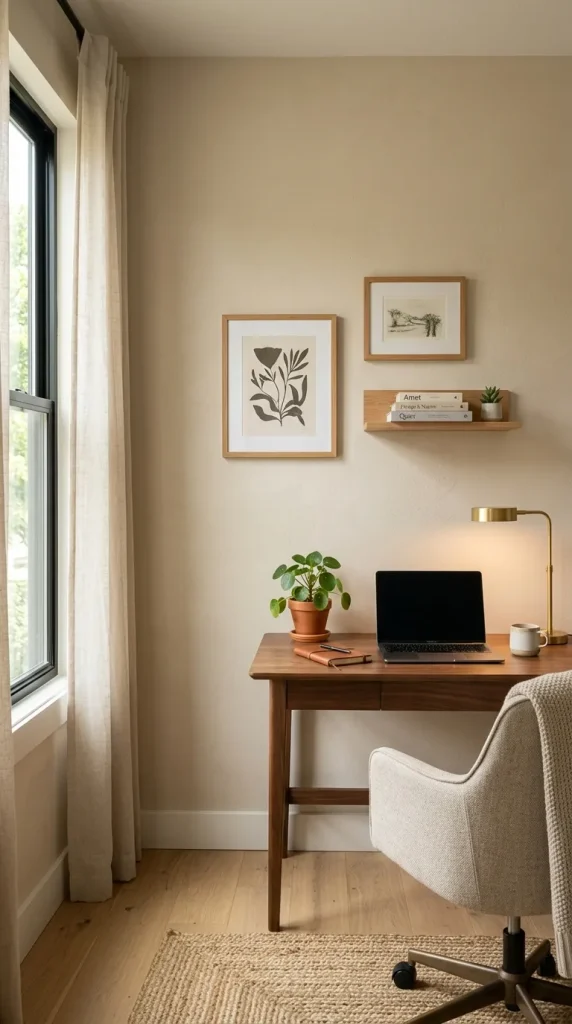
The wall color in your home office determines your mental state as you sit down to work. Japandi offices favor a palette that feels like an extension of nature.
- The Concept: Utilize soft, muted tones such as warm beige, cream, stone grey, or subtle taupe.
- Why it works: Neutral backdrops minimize visual distraction, allowing your brain to focus on the tasks at hand rather than the decor. This creates a sense of serenity essential for deep, uninterrupted work.
4. Curated Floating Shelves: Disciplined Storage
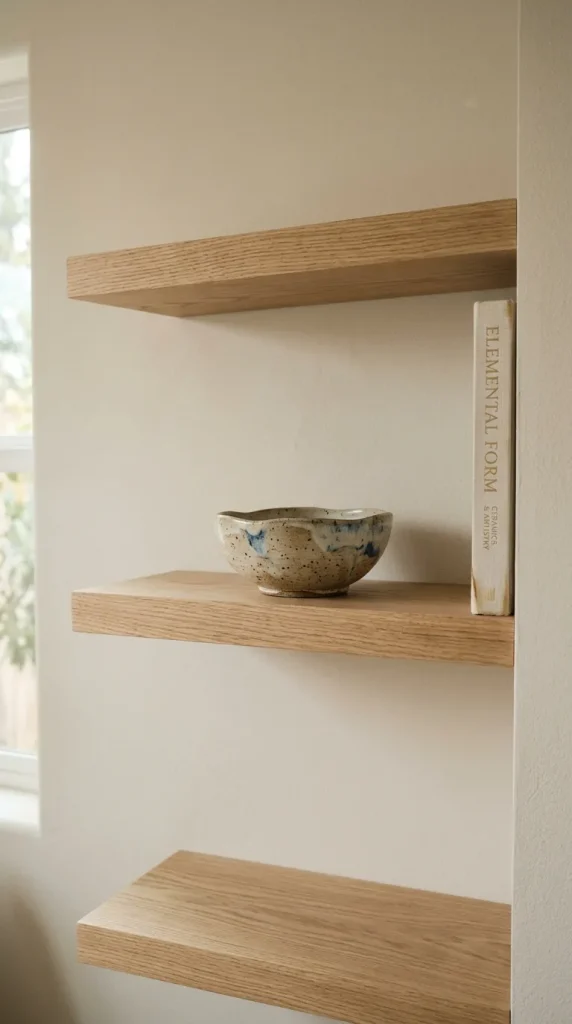
In a minimalist office, storage must be as beautiful as it is practical.
- The Concept: Install floating shelves crafted from the same light-wood species as your desk. Adhere to the “less is more” principle by styling these shelves with only a few essential items—a single artisanal ceramic piece or a book with a neutral spine.
- Why it works: By keeping displays sparse and intentional, you eliminate the visual “noise” of clutter. This disciplined approach turns your storage into a curated gallery.
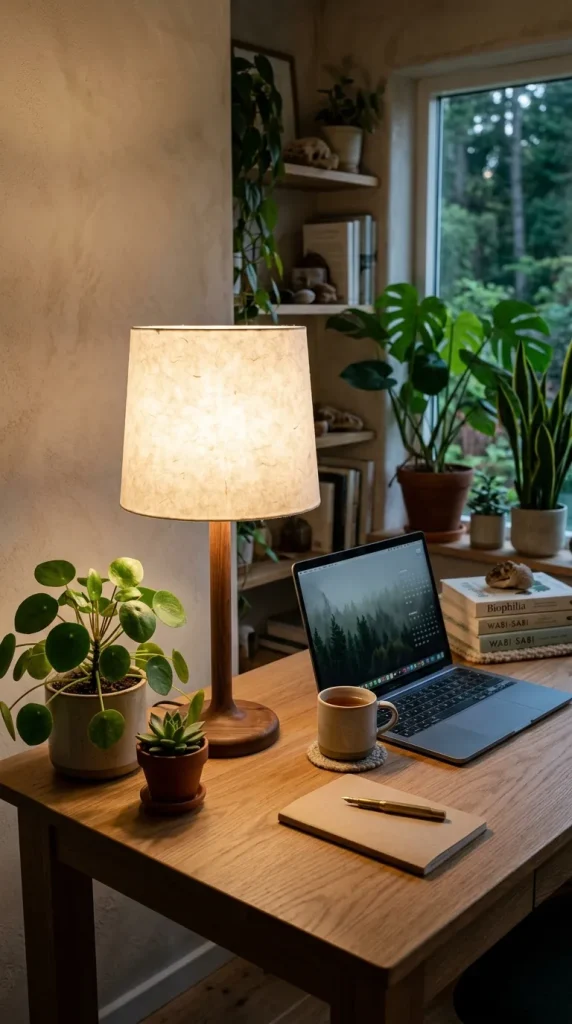
5. Biophilic Lighting: The Soft Glow of Focus
Harsh, overhead fluorescent lighting is the antithesis of a Japandi office. Instead, focus on soft, ambient lighting that mimics the natural path of the sun.
- The Concept: Incorporate a table lamp featuring a paper or linen shade. These traditional Japanese materials diffuse light gently, creating a warm and inviting atmosphere.
- Why it works: Diffused light reduces eye strain and adds a gentle, organic element to your desk, fostering a more restorative work environment.
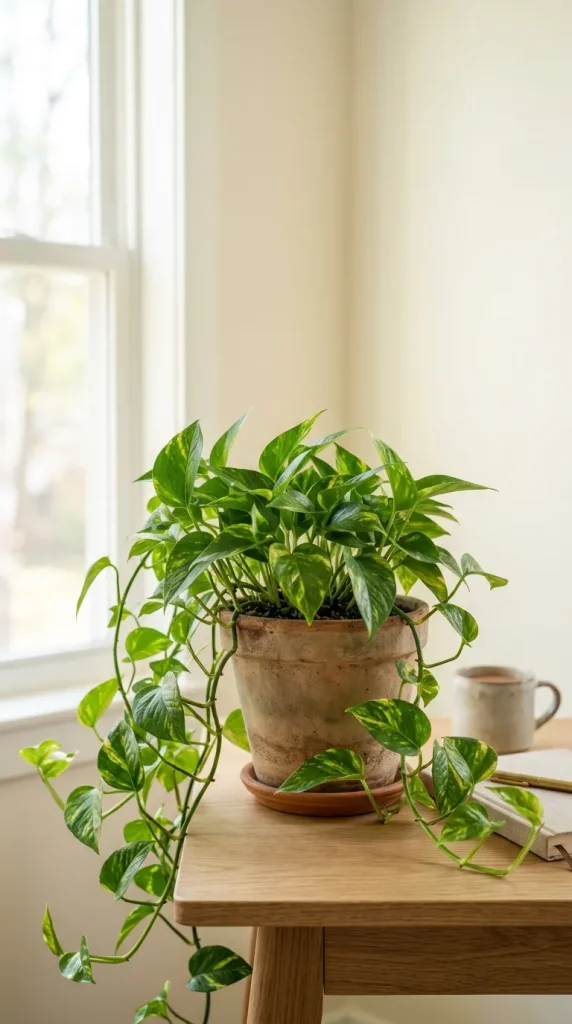
6. Sculptural Greenery: Bringing the Outside In
The Japandi aesthetic is deeply connected to nature. However, it avoids the “jungle” look in favor of refined, sculptural choices.
- The Concept: Add a single, high-impact plant—a miniature bonsai or a graceful, trailing pothos placed in a handmade clay pot.
- Why it works: This fulfills the need for biophilic design—the human need to connect with nature—without overwhelming the room with excessive foliage.
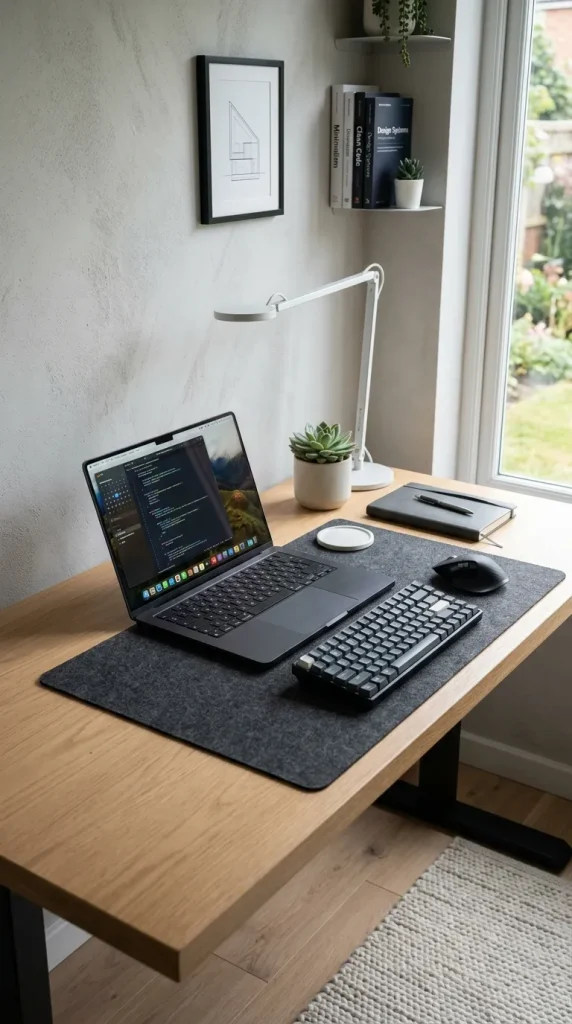
7. Hidden Tech Organization: The Invisible Office
The greatest enemy of minimalism is the tangle of charging cables, dongles, and power strips that inevitably clutter a desk.
- The Concept: Utilize cable-management trays and sleeves hidden beneath the desk surface. Ensure that all technology feels “integrated” into the furniture rather than piled on top of it.
- Why it works: Eliminating distracting cords allows you to maintain the aesthetic integrity of your minimalist design. An organized space is the foundation of an organized mind.
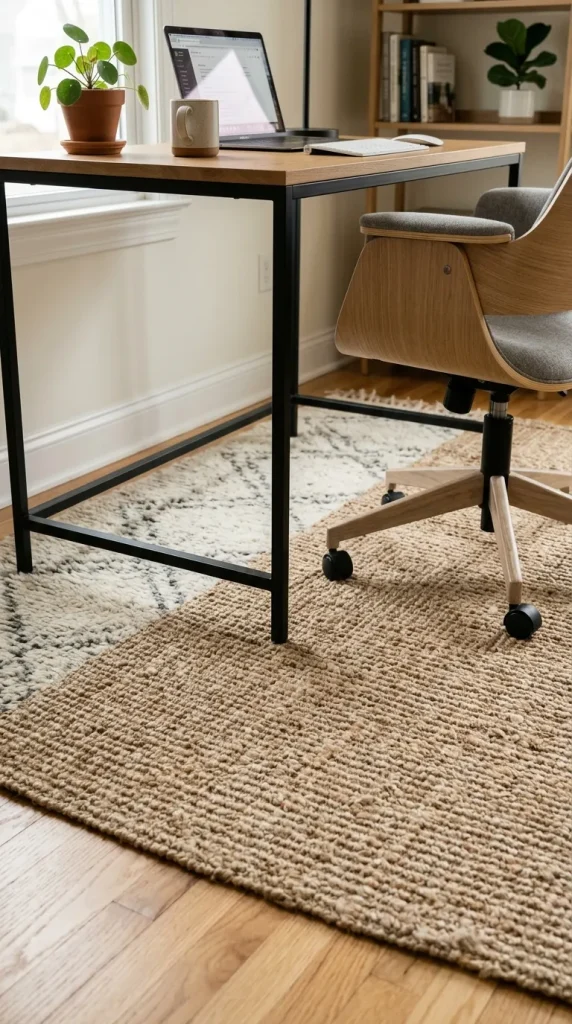
8. Tactile Rug Foundations: The Sensory Layer
The floor is often ignored in home offices, yet it contributes significantly to the acoustics and warmth of the room.
- The Concept: Layer a rug crafted from natural fibers, such as jute, sisal, or wool, underneath your desk area.
- Why it works: Rugs add another layer of warmth to the room and help dampen sound, creating a quieter, more private sanctuary for your professional calls and tasks.
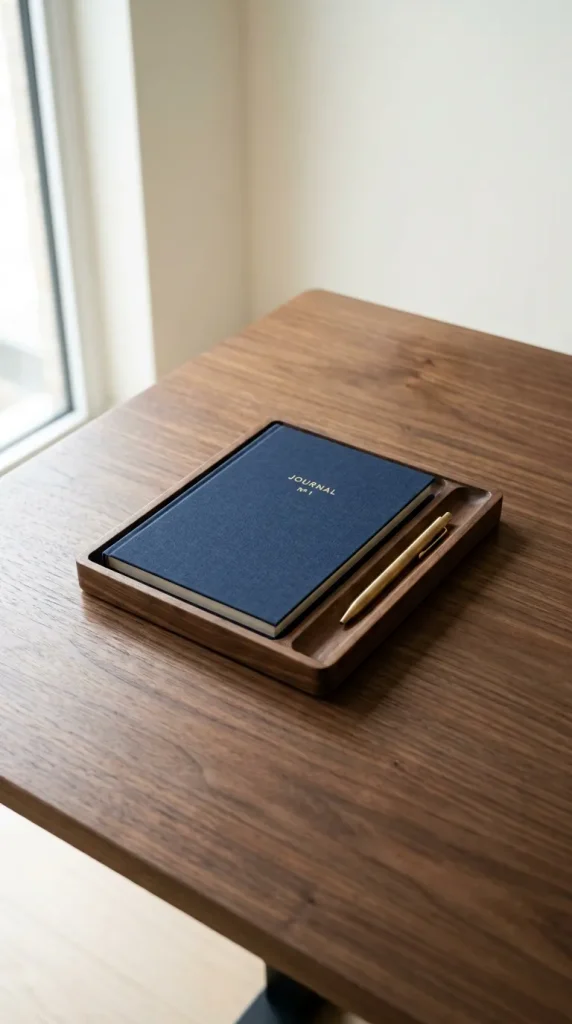
9. Intentional Surfaces: The Power of Empty Space
A cluttered desk leads to a cluttered mind. Japandi philosophy prizes the beauty of empty space, or ma.
- The Concept: Keep the surface of your desk clear of all non-essential items. If you need tools, place them in a small, refined wooden tray that can be moved aside when not in use.
- Why it works: By creating an intentional “empty” surface, you provide yourself with the mental room to think, create, and solve problems without external interference.
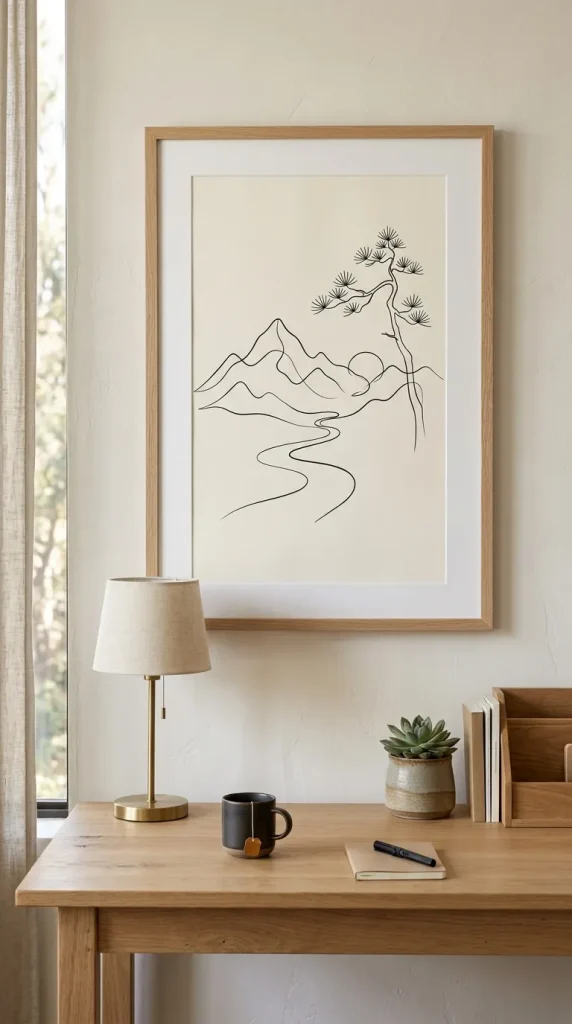
10. Zen-Inspired Art: The Singular Focal Point
Art in a Japandi office should be meaningful, not just decorative.
- The Concept: Hang one large, minimalist piece of art—such as a simple line drawing, a monochromatic abstract print, or a black-and-white landscape—in a light-wood frame.
- Why it works: This serves as a singular focal point for the eye to rest upon during moments of reflection, preventing the feeling of sensory overload.